How to choose plastic pallets that suit your application
How to choose plastic pallets that suit your application
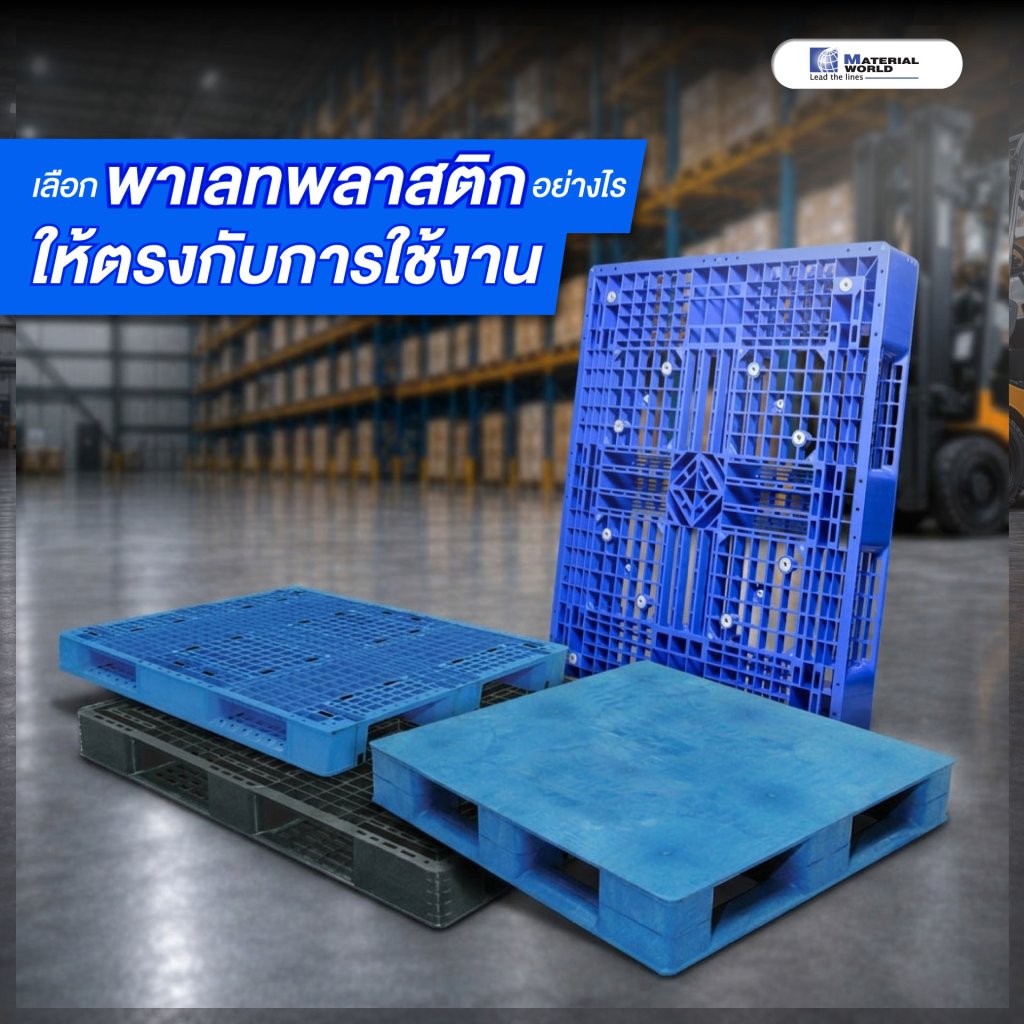
Choosing plastic pallets that best fit your application is not simply about selecting the one with the highest load capacity or one that matches the product dimensions. It is about ensuring compatibility between the characteristics of the goods being handled, the lifting and handling equipment used, and the type of storage racking system in place. When pallets are selected appropriately, it helps maximize cost efficiency and reduce maintenance expenses as well.
Plastic pallet selection can be categorized according to the most common real-world usage requirements as follows:
Based on the pallet surface design (Top Design)
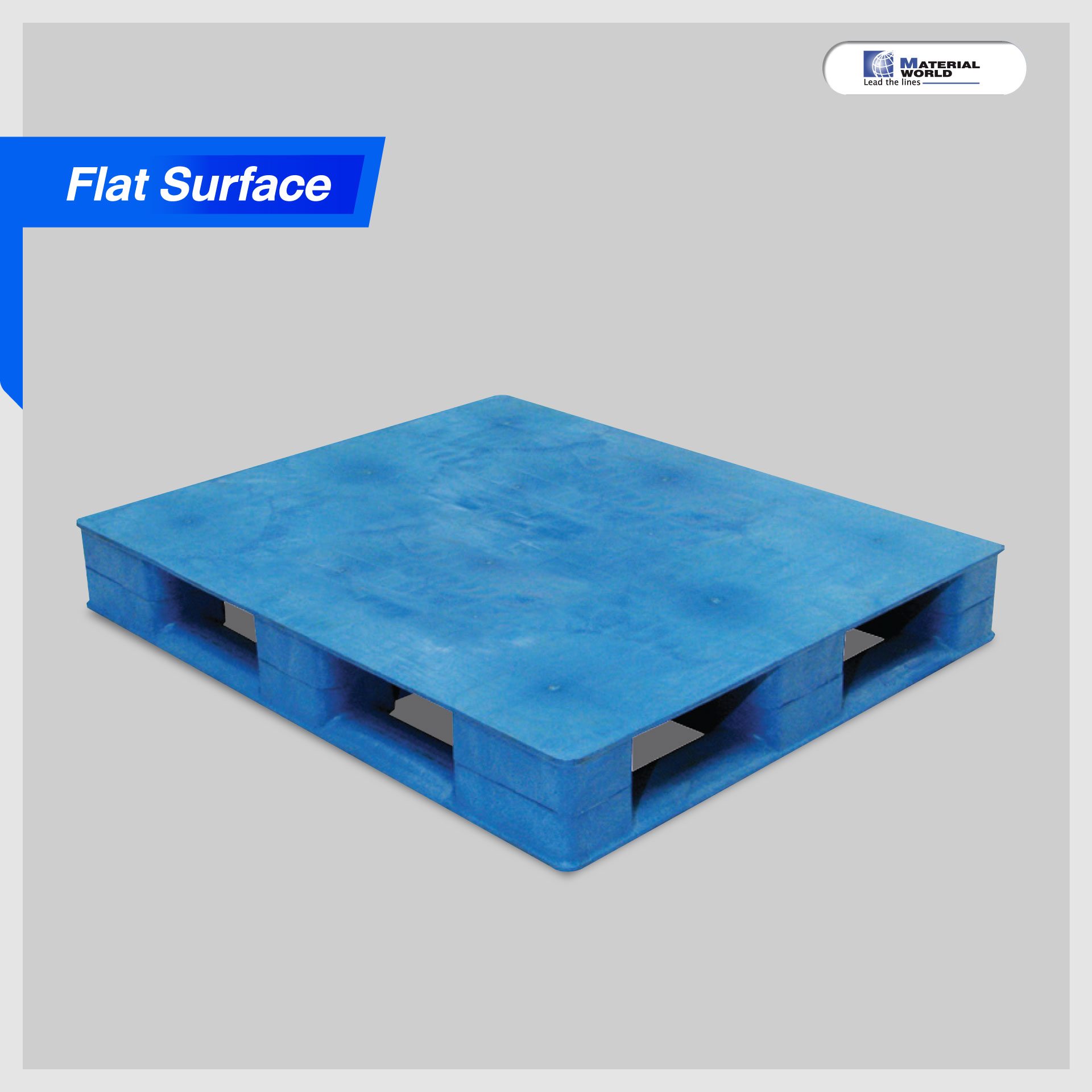
• Flat surface (Smooth top deck)
Suitable for the food, pharmaceutical, and cosmetics industries, as it is easy to clean and does not allow dust or bacteria to accumulate on the pallet surface.
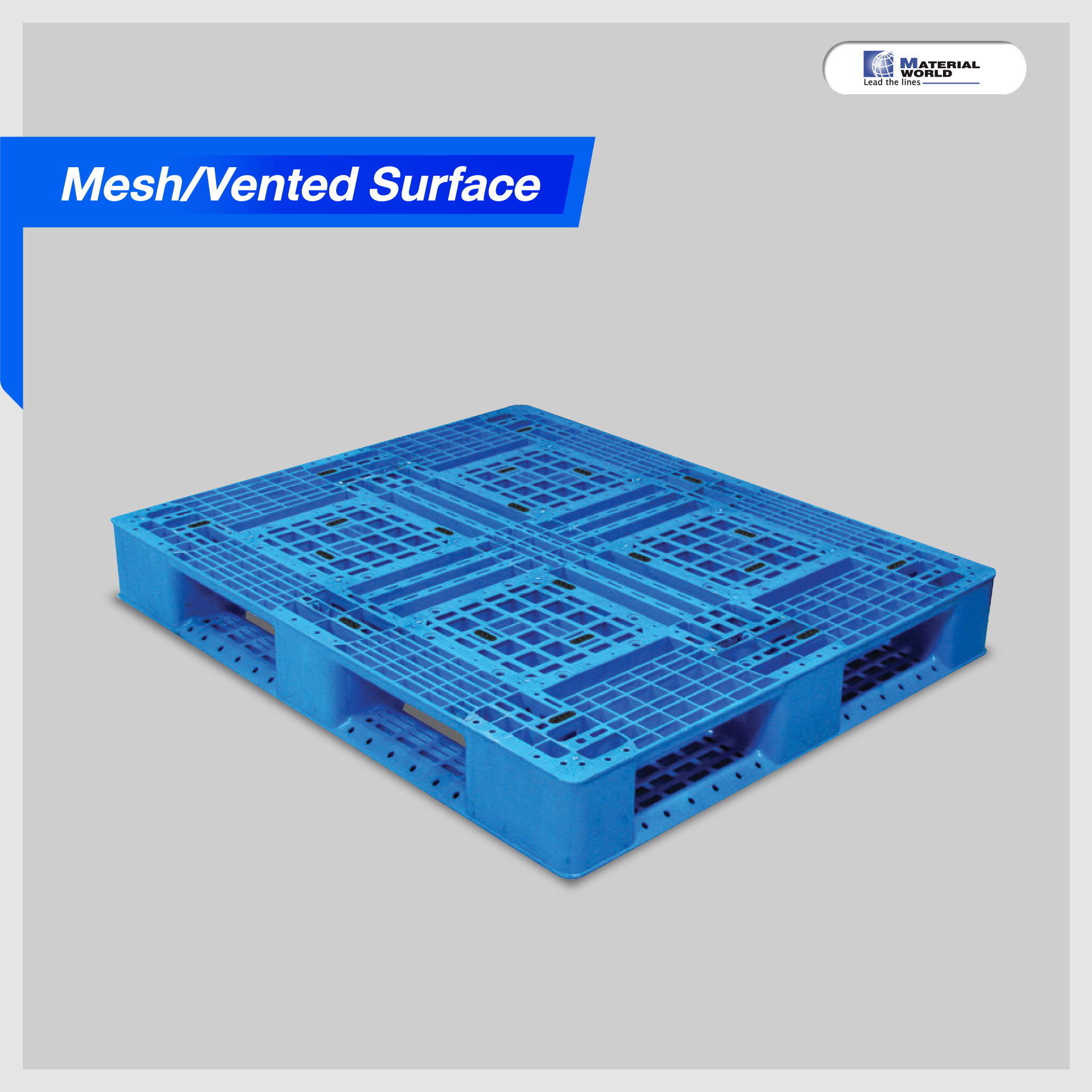
• Mesh surface (Vented design)
Suitable for agricultural products, fresh goods, or items that require good ventilation and drainage for any moisture coming with the goods. This type of pallet is lightweight, more affordable than flat-top pallets, and provides excellent moisture ventilation.
• HDPE plastic (High-Density Polyethylene)
This type of plastic is durable, flexible, and has good resistance to low temperatures. It can be used effectively in cold storage and refrigerated environments.
• PP plastic (Polypropylene)
It is strong and highly resistant to abrasion, and can withstand high temperatures. However, it is not suitable for use in cold storage or freezing conditions.
Selection based on base structure and forklift entry access
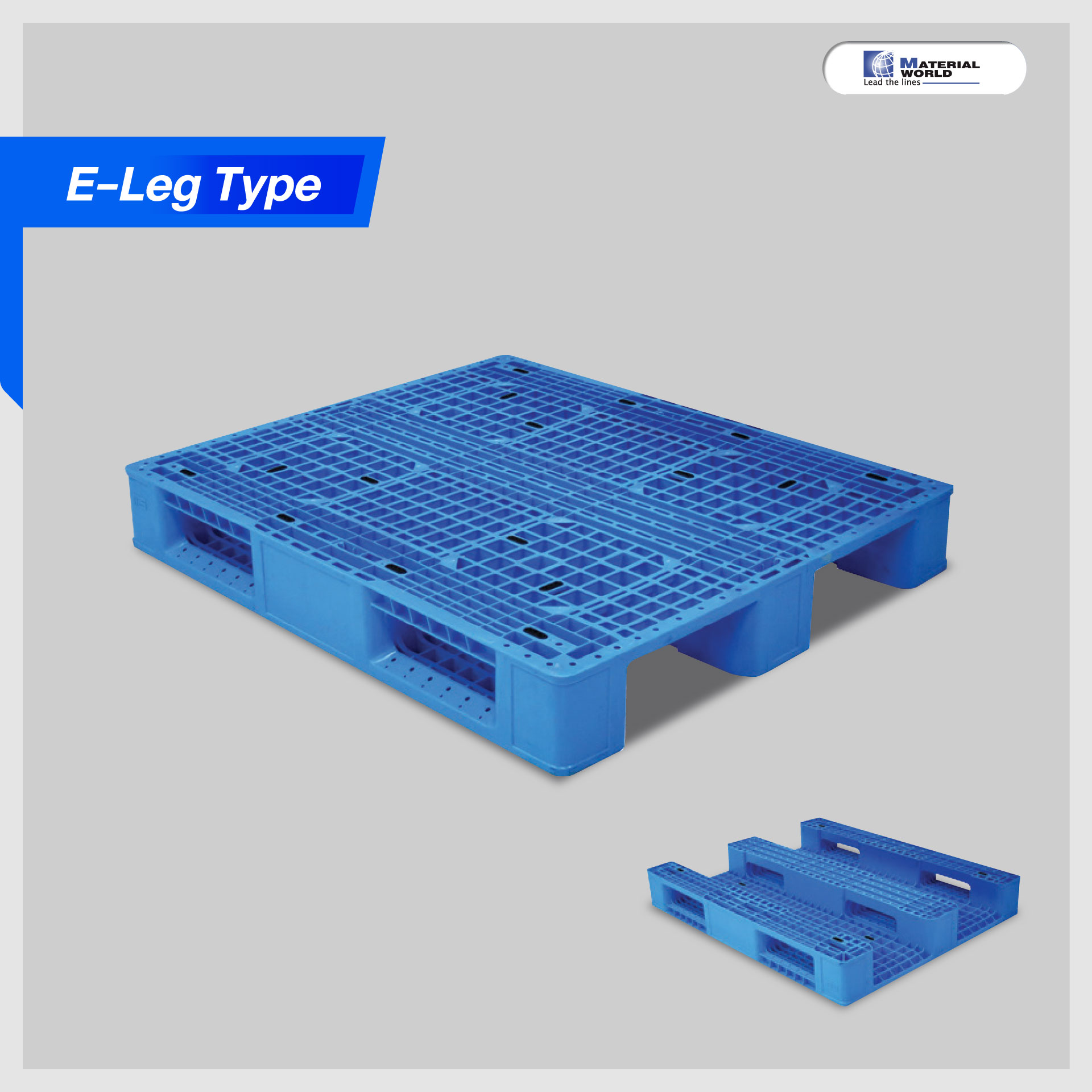
• E-leg type (E-type legs)
Suitable for both circulation and export use. Forklifts can access and lift it from all four directions (4-way entry). It is compatible with forklifts, pallet trucks, and stackers.
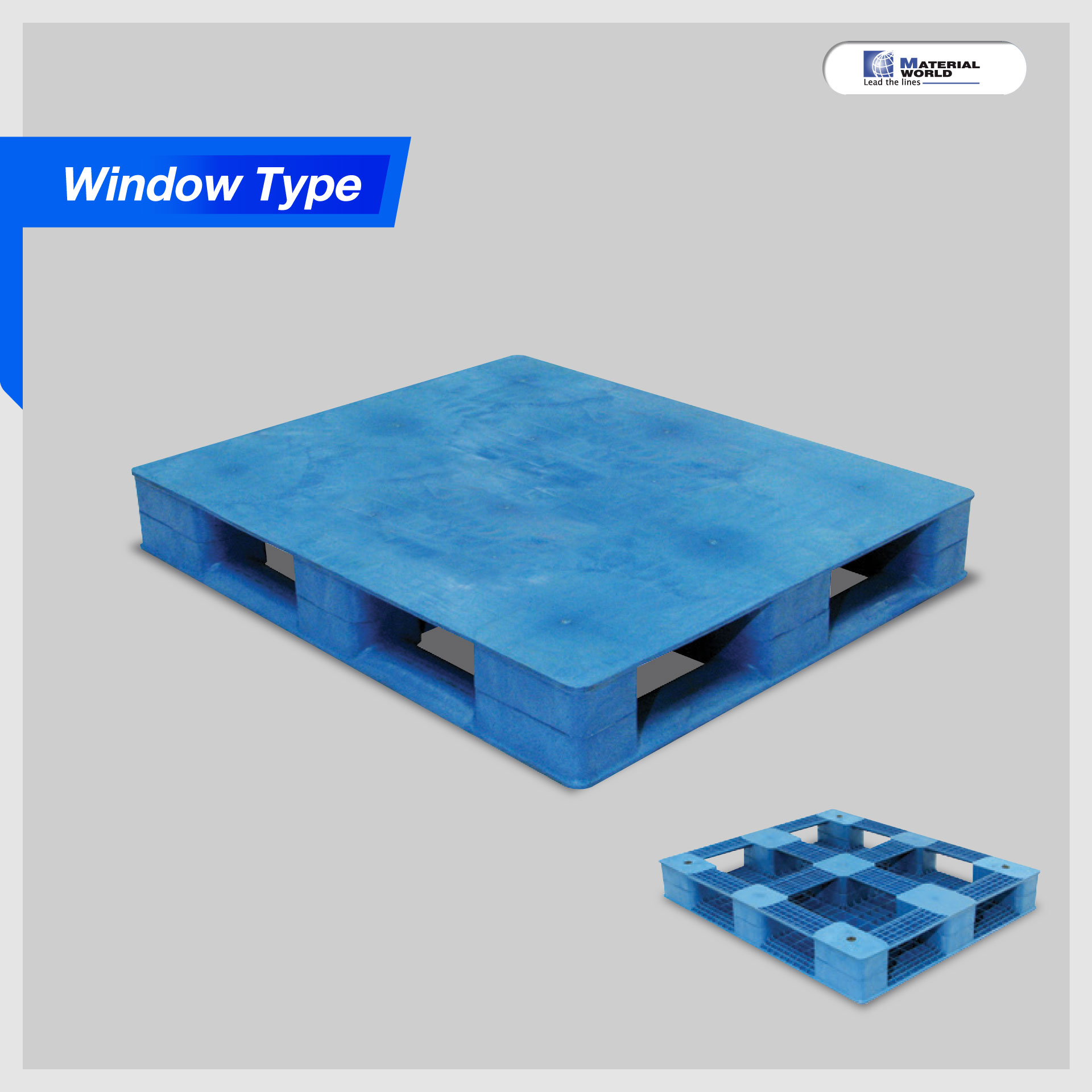
• Window type
It provides excellent weight distribution and is the strongest among pallet types. It can be used with roller conveyor systems due to its bottom support beams, and is compatible with both forklifts and pallet trucks.
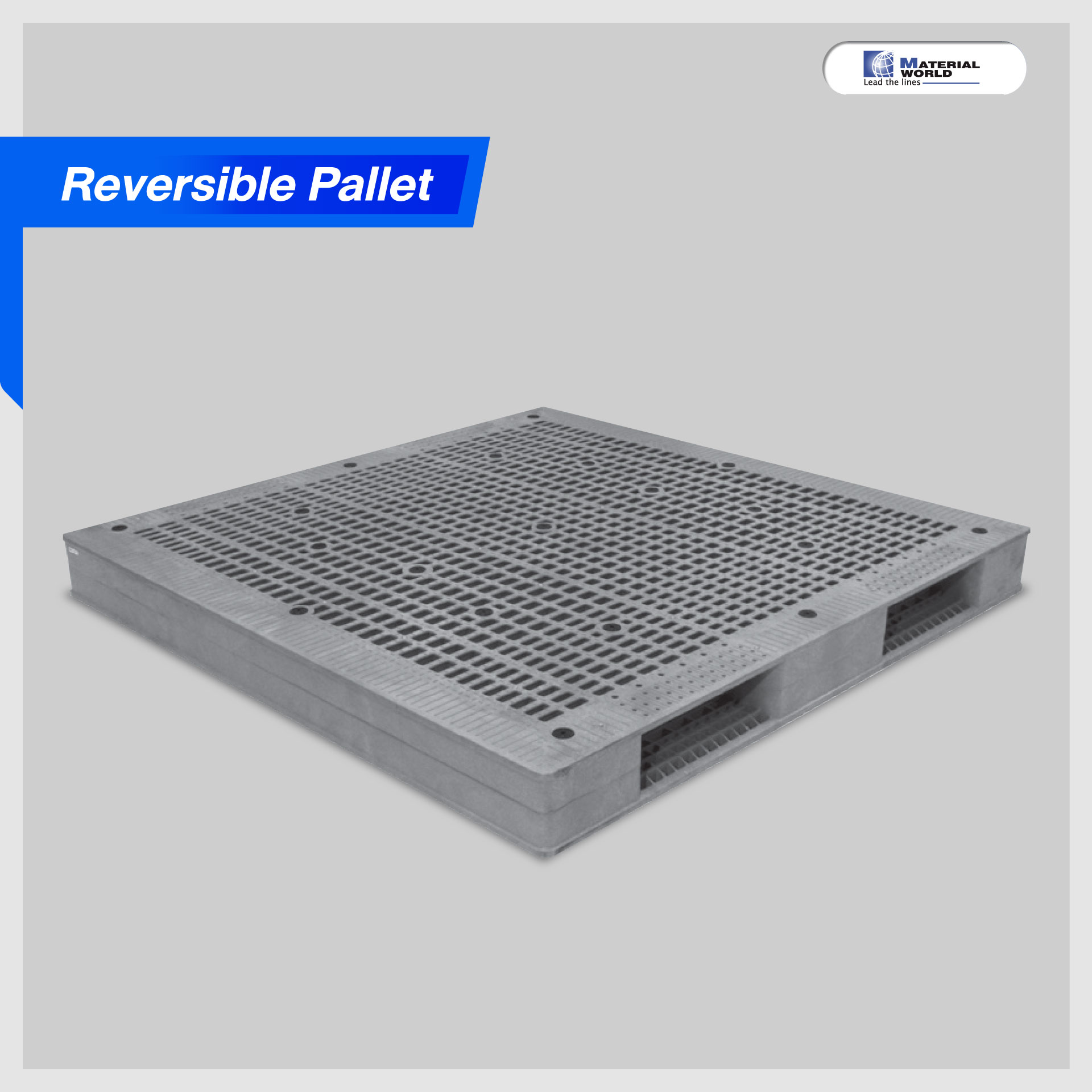
• Reversible pallet
It is strong and durable, and allows multi-layer stacking of goods. Its key feature is that it can be used on both sides, as the top and bottom structures are identical. It is suitable for bagged or sack-type products and is intended for use with forklifts only, as the wheels of other types of handling equipment may get caught on the beams.
In addition, selecting pallets should also consider storage conditions and export requirements to the destination region, such as Static Load (load capacity when stationary), Dynamic Load (load capacity during movement), and Racking Load (load capacity when placed on storage racks). For returnable pallet systems, it is also important to consider standardized dimensions required by the destination country.
Expert Tips :
Before purchasing a pallet, make sure to carefully check the weight capacity (Loading Guide) to prevent overloading.
-
Static LoadThe floor’s load-bearing capacity is generally around 4,000–6,000 kilograms when placed on the floor.
-
Dynamic LoadThe actual weight of the goods, including the pallet, during forklift handling is approximately 1,000–1,500 kilograms.
-
Racking LoadThe load capacity when placed on a storage rack is usually lower than other load conditions, at approximately 1,000 kilograms.
#PlasticPallet #Warehousesolutions

MW
Blog Category
Latest
-
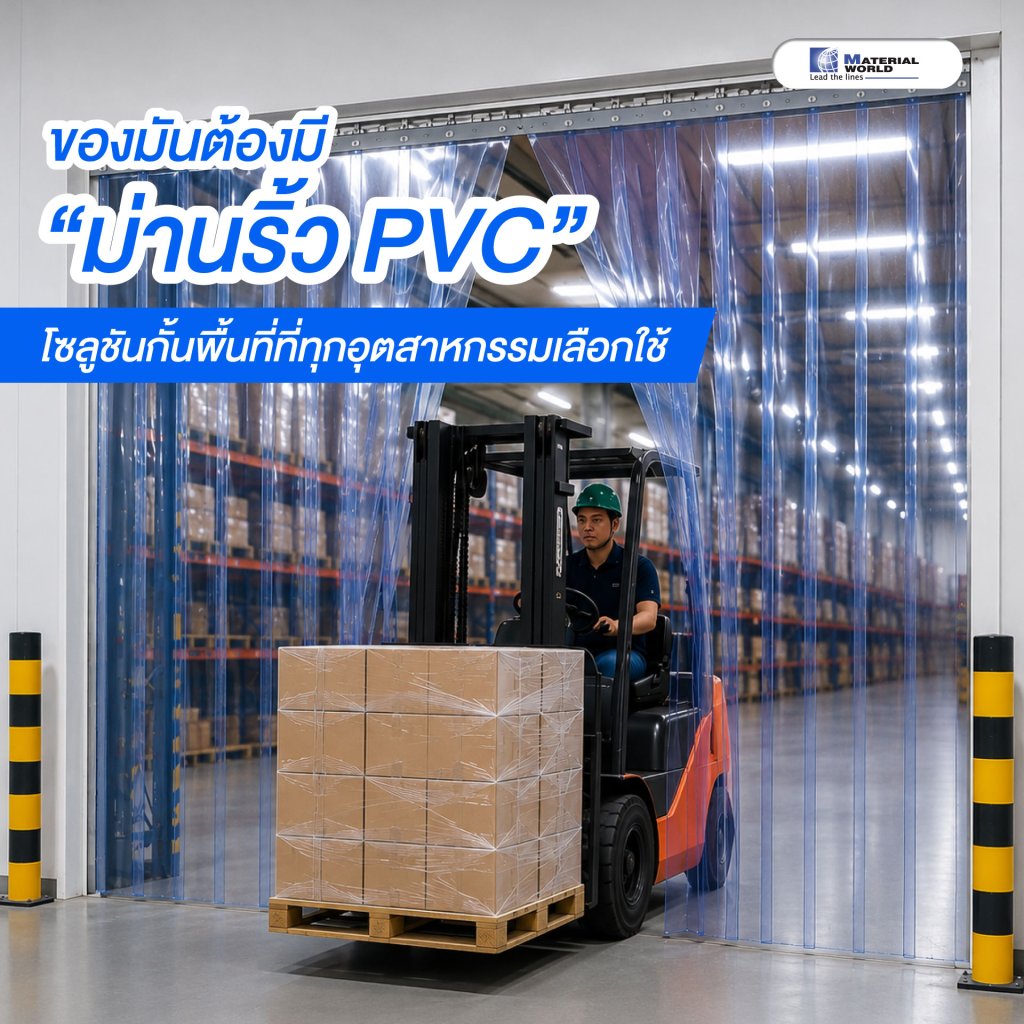 A Must-Have: PVC Strip Curtains — The Space-Separation Solution Trusted Across Industries In industrial factories, warehouses, and even r...
 -
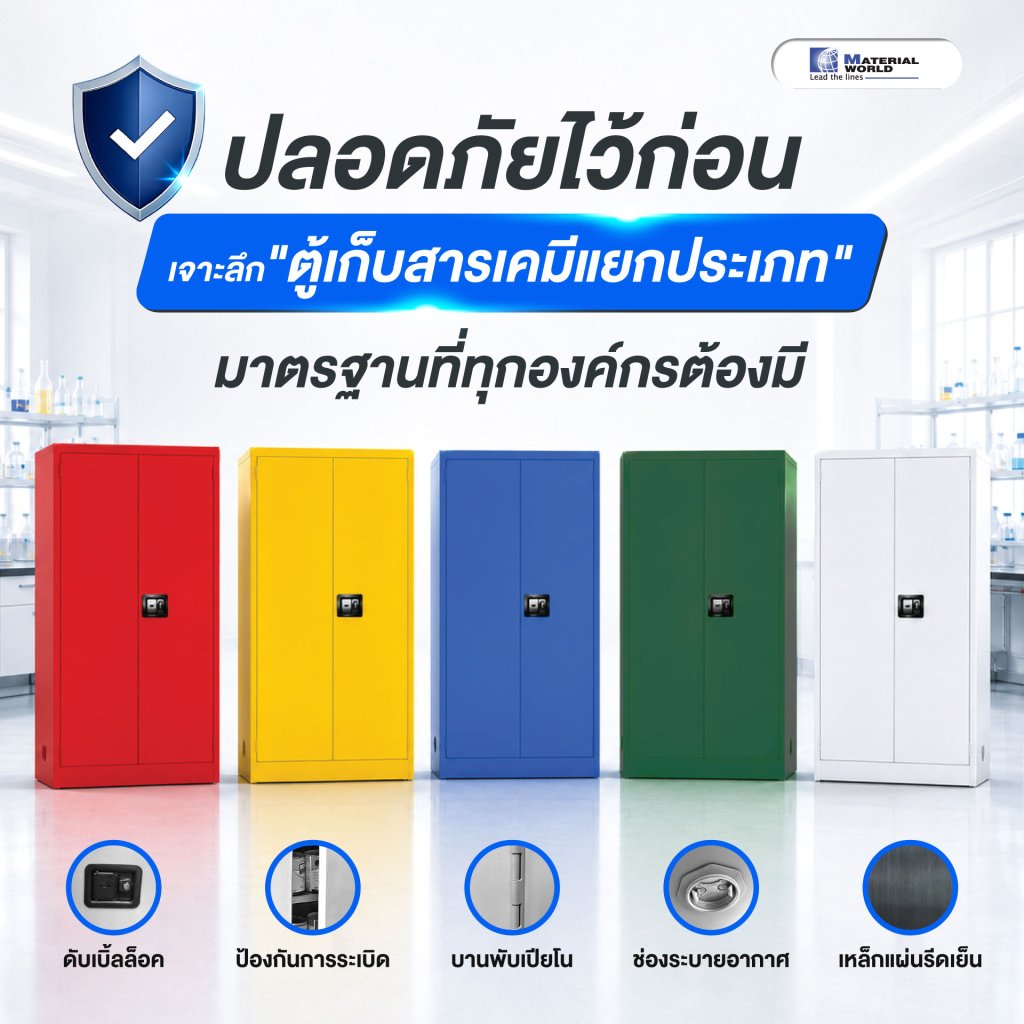 Safety First: An In-Depth Guide to Chemical Storage Cabinets by Hazard Classification — An Essential Standard for Every Organization In laboratories, industrial facilities, warehou...
 -
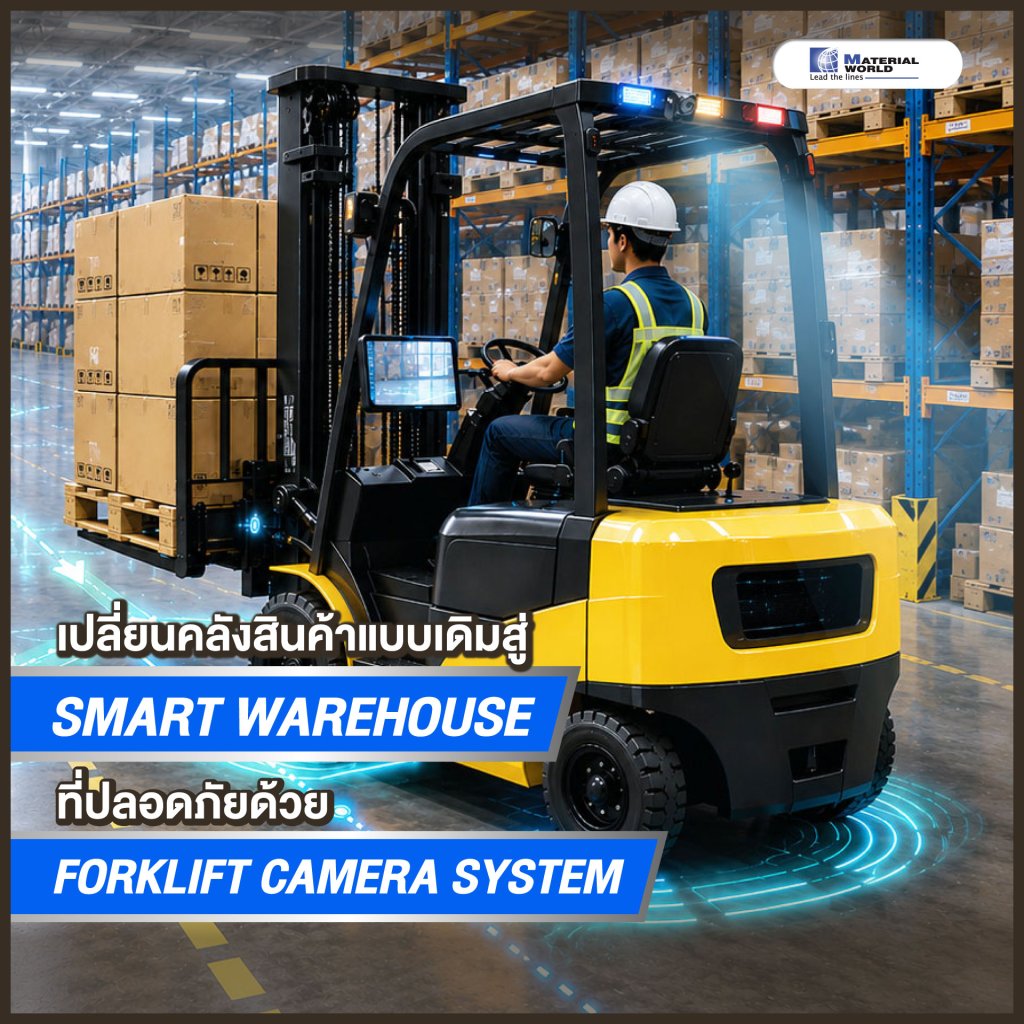 Transform Your Traditional Warehouse into a Safer Smart Warehouse with a Forklift Camera System. Within the warehouse, the continuous movement o...
 -
 How to choose plastic pallets that suit your application Choosing plastic pallets that best fit your app...
 -
 Protect Your Warehouse Racking System with Rack Column Guards and Safety Barriers. In most warehouses, goods are constantly being ...